
Outsourced CAD Drafting for Telecom: What to Send Us to Get an Accurate Quote
The single biggest driver of quote accuracy isn't how polished your input is; it's whether we know the scope. Here's what actually moves a quote from a rough estimate to a firm number.
Pathworks Engineering Team
We've quoted projects from a napkin photo and quoted projects from a full GIS export. Both can produce an accurate 12-hour quote; the difference isn't polish, it's clarity about scope. Here's what actually matters.
Approximate scale beats no scale
You don't need a survey-grade route. A rough home count, an approximate route length, or "about 40 poles" gives us enough to size the effort. What slows quoting down is genuine ambiguity about whether a project is 50 homes or 500.
Tell us the architecture, even if it's not finalized
GPON, XGS-PON, point-to-point: if you already know, say so. If you don't, tell us that too. "Not sure yet, advise" is a completely valid answer and routes the request to the right engineer, it just needs to be explicit rather than assumed.
Flag anything unusual about the site
Underground-only municipality rules, a customer standard that deviates from typical practice, an unusually tight deadline: these are the details that change scope more than route length does. A one-line note in the project description catches most of them.
Existing standards and templates shorten the whole project, not just the quote
If you have CAD layer standards, a preferred symbol library, or client-specific drawing templates, attach them at request time. It doesn't just help us quote accurately; it means the first draft we deliver is closer to final, with fewer rounds of formatting-only revisions.
What we don't need
We don't need finished drawings, a formal scope-of-work document, or survey-grade data to give you a real number. Those help, but a phone photo of a marked-up map and a rough description of what you need is a complete, quotable request.
Related articles
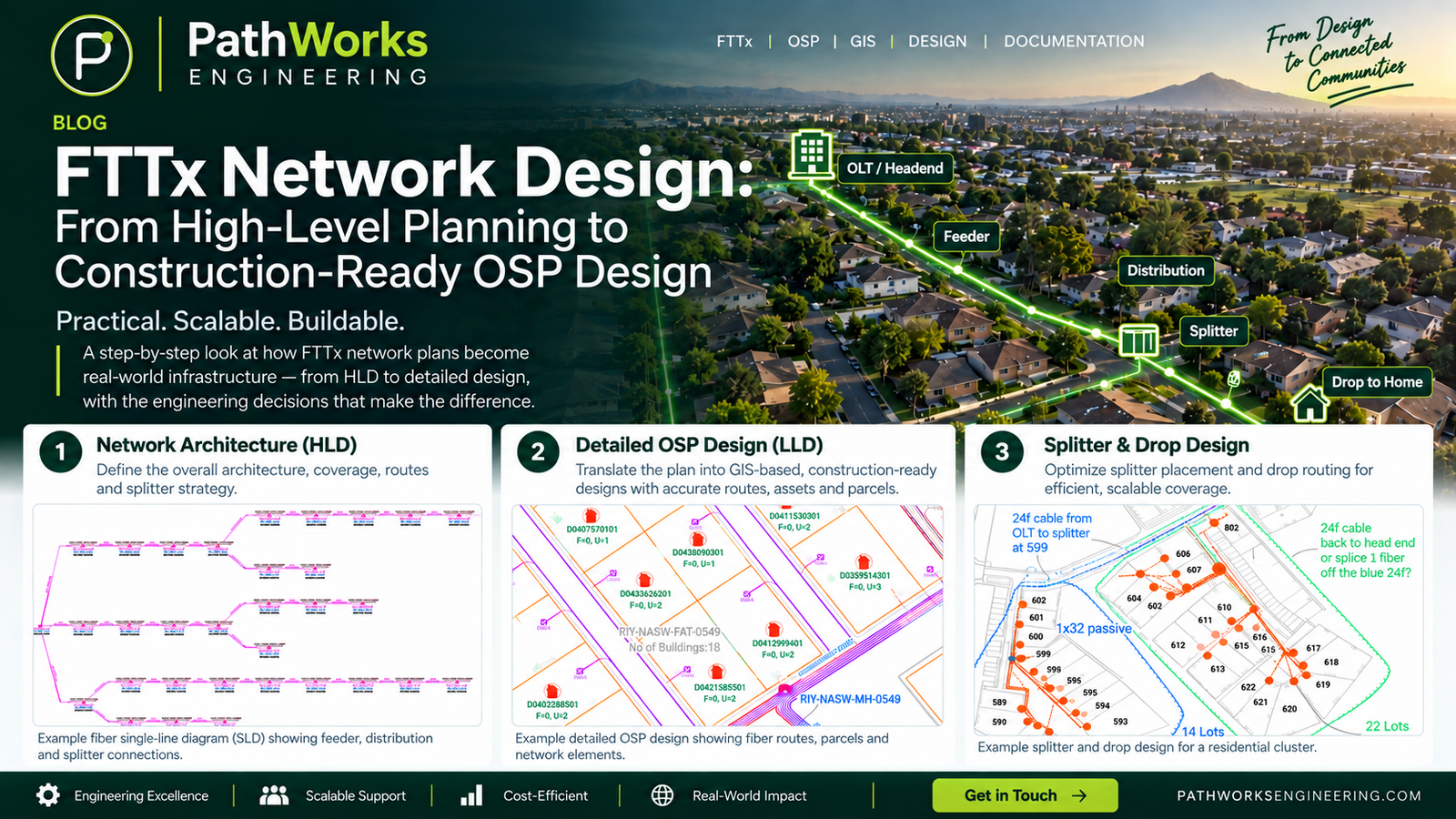

FTTx Network Design: From HLD to Construction-Ready OSP Engineering
A practical guide to FTTx network design, covering HLD, LLD, splitter planning, fiber topology, BOQ development, QA/QC and construction-ready OSP documentation.
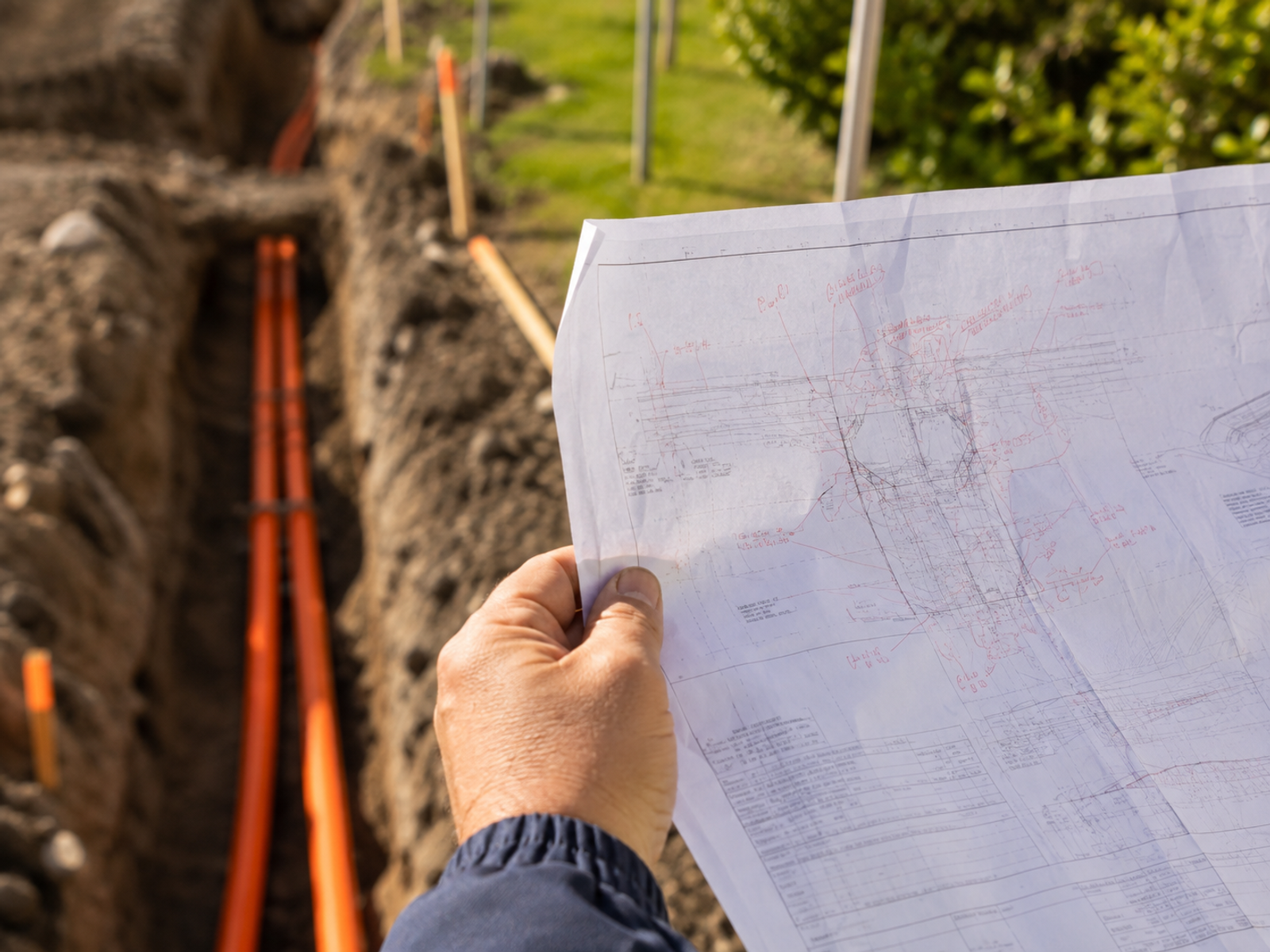
As-Built Redlining: Why the Built Network Stops Matching the Design, and How to Control the Drift
The network in the field and the network on the drawing start drifting apart the moment construction begins. Here's how to control that drift instead of discovering it years later.

GPON Power Budgets: Sizing Split Ratios Against Real Receiver Sensitivity, Not the Datasheet Ceiling
Sizing a split ratio off the datasheet ceiling looks fine on paper and fails in the field. Here's how to budget against real receiver sensitivity instead.